CCIN session focuses on the practical challenge of putting people first in Pride in Place
Council Officers from across the Co-operative Councils’ Innovation Network came together this week for the first Co-op Places - Pride in Place Community of Practice, a session focused on a question many areas are now wrestling with: what does it take to make Pride in Place feel genuinely rooted in local people, rather than simply managed from above?
This online session brought together officers, advisers and practitioners working directly on Pride in Place, with speaker contributions from CCIN Affiliate Members
Mutual Ventures and Anthony Collins Solicitors.
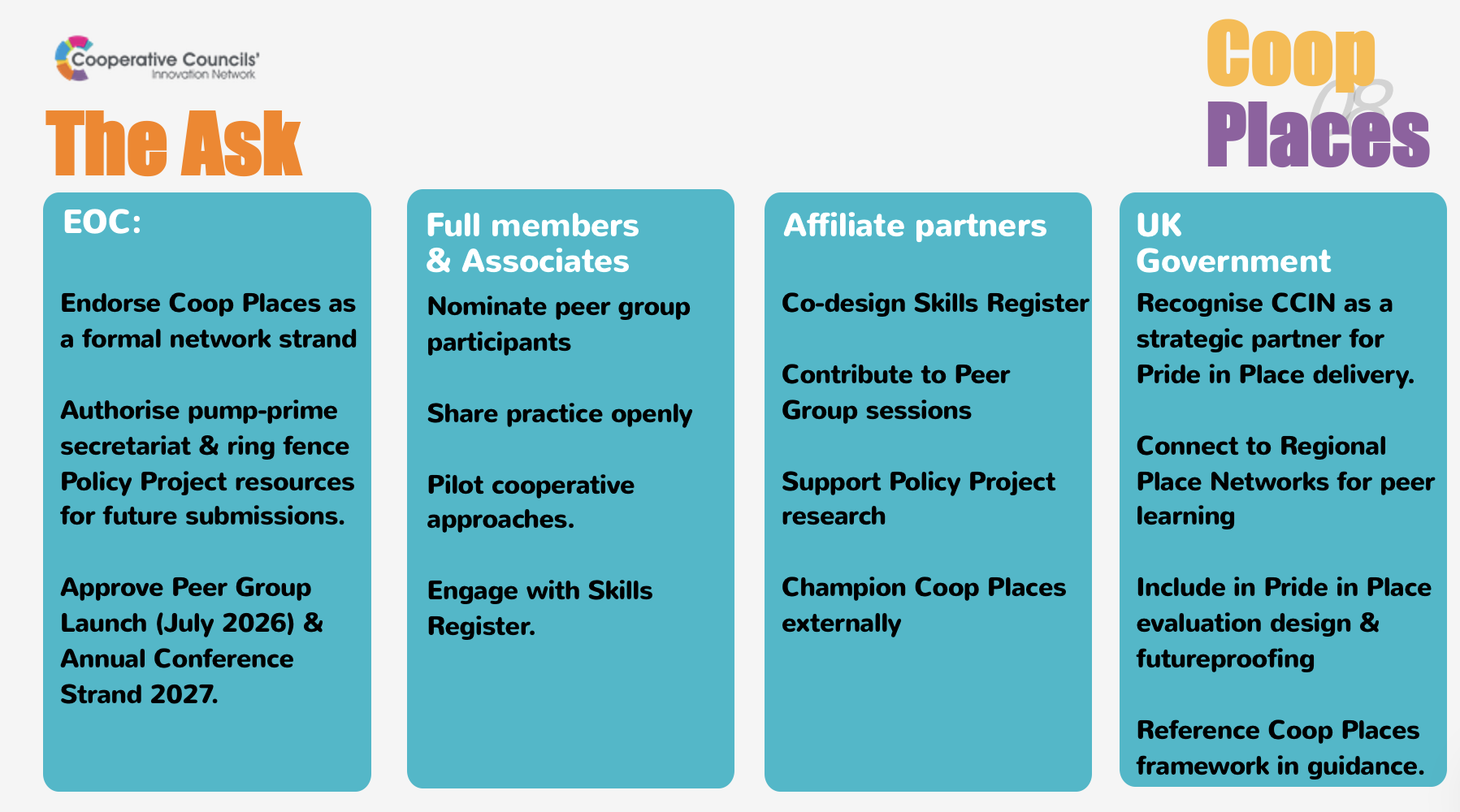
Opening the session, Pete described the scale of the opportunity in front of the Network. More than 25 CCIN member councils are involved in over 60 Pride in Place neighbourhoods, giving the network a significant base of local experience to learn from. His message was straightforward: CCIN does not want to duplicate what MHCLG is already doing, but it does want to support officers, help councils share practice openly, and make space for a more cooperative way of working around neighbourhood boards and local priorities.
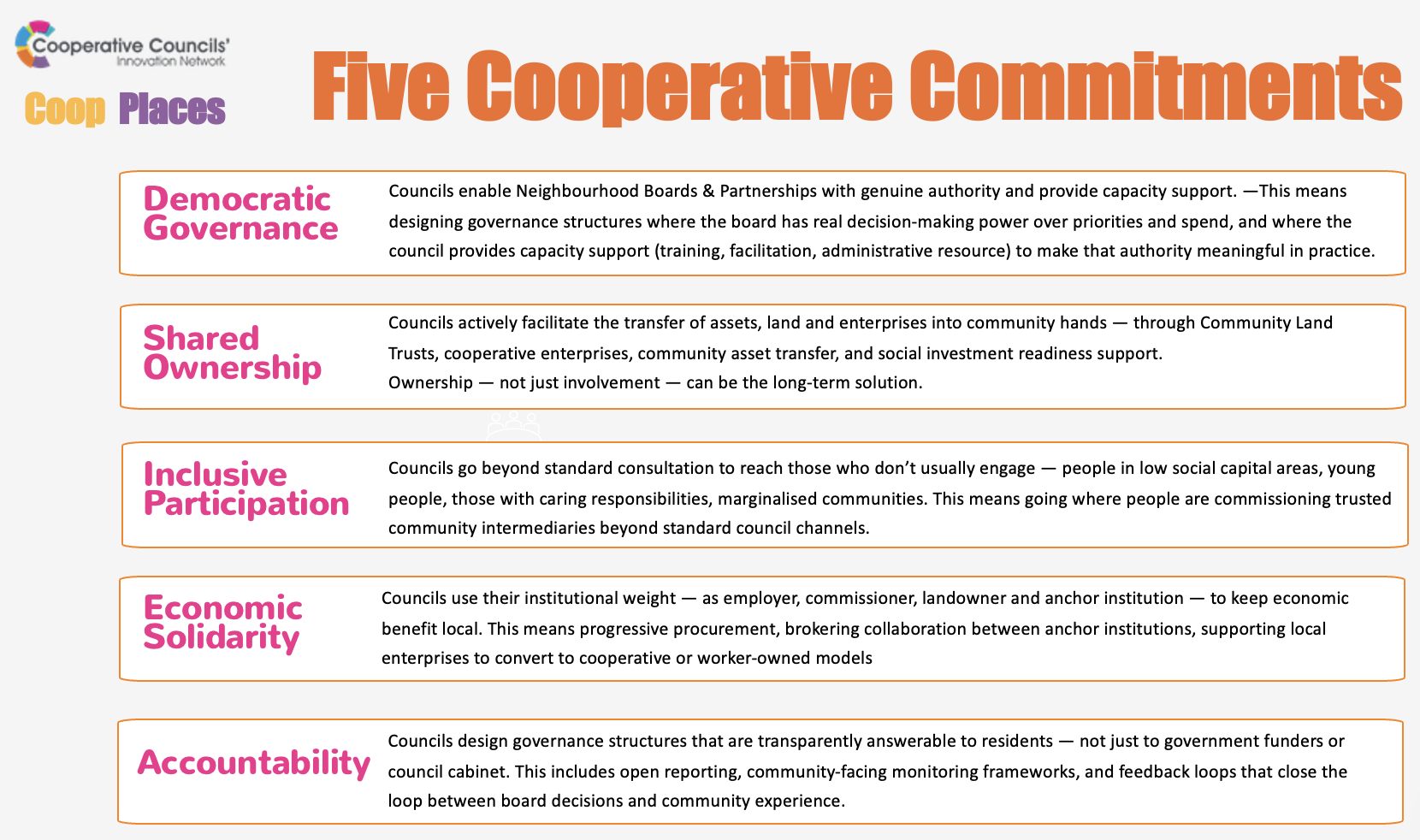
That practical emphasis ran through the session. Co-op Places was framed around five cooperative commitments to bring to life what cooperative placemaking looks like in practice, thereby giving people a stronger stake in the places where they live.
Mark Bandali of Mutual Ventures talked through his experience of what he’s hearing around what councils are facing as they shape their ten-year plans and four-year investment strategies. Drawing on work with Pride in Place areas that Mutual Ventures have worked within, he talked participants through four main considerations: shaping a clear vision and investment strategy, building on what already works locally, moving from one-off consultation to ongoing conversation, and making sure plans are deliverable as well as ambitious.
Pride in Place, he suggested, needs both quick wins and longer-term change: enough visible progress to build confidence, but also enough patience to back deeper work around capacity, local leadership and community-led solutions. He also stressed that none of this happens by magic. Councils and boards need to think now about procurement, baselines, monitoring, readiness for delivery and how investment decisions connect back to a longer-term vision.
One of the clearest themes to emerge was the opportunities for relationships between councils and neighbourhood boards. Mark spoke about councils “ceding control” in some respects, but not in the sense of stepping back or walking away. The point was more practical than that: councils as enablers, helping clear obstacles, making governance work, and giving neighbourhood boards the support and authority needed to make meaningful decisions.
The conversation became especially interesting when it turned to engagement. “Conversation rather than consultation” has become a familiar phrase in policy circles, but the discussion here was less slogan and more substance.
That linked closely to the session’s second speaker,
Sarah Patrice, partner at Anthony Collins Solicitors, who drew on more than two decades of her experience in neighbourhood regeneration and community governance. Speaking from long involvement in earlier programmes such as SRB and New Deal for Communities, she reflected on how much of that learning still matters now: getting people onto a board is only part of the story; with a big the task of helping to build the conditions in which communities can really influence priorities, stay involved over time and see themselves in the governance of the programme.
Sarah’s contribution brought a welcome note of candour. Boards, she noted, are rarely straightforward. Representation matters, but so do support, succession, local trust, and the ability to involve people in different ways at different points. She encouraged participants to look beyond the board table itself: towards youth engagement, wider stakeholder links, informal routes in, and the practical work of making sure neighbourhood structures reflect the area rather than only the people with the loudest voices or the most time to spare.
Officers shared questions about how thematic or area-based subgroups could be formed, how to involve residents who do not want formal board roles, and how to manage conflicts of interest without closing the door on people already active in community life.
One example shared from Telford pointed towards a more open model, using informal area-based groups to widen involvement and create an ongoing conversation with communities beyond the board itself.
If there was one thread running through the whole session, it was that Pride in Place is about more than programme management. It is also a live test of whether neighbourhood boards can feel real to local people, whether councils can support without over-controlling, and whether investment can strengthen the civic life of a place rather than simply pass through it.
CCIN’s role, as the session suggested, is to help member councils work through those questions together — practically, openly and with cooperation at the centre
For further information contact:
Pete Vallance
Strategy, Events and Membership – Lead
Cooperative Councils Innovation Network