Principles met
-
Co-production
We will develop systems that enable citizens to be equal partners in designing and commissioning public services and in determining the use of public resources.
-
Innovation
We will embrace innovation in how we work with local communities to drive positive change.
-
Learning
We will capture and ‘expand’ the experience and learning from individual projects and approaches in order to encourage broader application of co-operative principles within individual member Councils and across the Network.
-
New models of meeting priority needs
In exploring new ways of meeting the priority needs of our communities we will encourage models, such as co-operatives and mutuals, which give greater influence and voice to staff and users. in designing and commissioning public services and in determining the use of public resources.
-
Social partnership
We will strengthen the co-operative partnership between citizens, communities, enterprises and Councils, based on a shared sense of responsibility for wellbeing and mutual benefit.
-
Walking the talk
As a membership organisation, we will make this statement of our principles operational by:
• Co-operation among members: Our members work together to help each other implement our values, sharing experiences and learning.
• Openness of membership: Full, Associate and Affiliate Membership is open to any qualifying Council, organisation or individual who shares our values and is committed to putting them into action.
• Co-production of the Network’s work: Members help shape the Network’s work programme and the content of events and written products.
• Action-focused: The network is a vehicle for helping councils translate co-operative values and principles into policy and practice.
•Membership-based: The network is majority funded by modest membership subscriptions from its member Councils, Associates and Affiliates.
•Non-party-political: Members share the belief that working co-operatively within and across communities holds the key to tackling today’s challenges.
The Inverclyde Approach delivers a place-based and whole family approach to support those living in poverty or facing inequalities, based on the premise that alleviating poverty requires a network of interconnected partners and collaborations to address families’ increasingly complex needs.
This brings together four distinct projects, delivered by a range of partners:
- Routes into Supported Employment (supporting men aged 20-40 with a range of complex issues, including recovery from addiction)
- Early Adopter Communities (a locality-based approach to delivering affordable childcare)
- Home Start (supporting families with an emphasis on parents with mental health concerns and children under five)
- Thrive Under 5 (providing families with children under five with resources and knowledge to make healthier choices around food)
The Inverclyde Approach evolved from a theory of change developed by the Inverclyde Child Poverty Action Group to respond to a pressing local priority: tackling child poverty in a community where around 22% of children are living in poverty after housing costs, with many families experiencing increasingly complex challenges exacerbated by the lasting effects of the COVID-19 pandemic and the ongoing cost-of-living crisis.
This case study focuses on the Early Adopter Communities project. This involved piloting a locality-based approach to delivering affordable childcare to low-income families and to child poverty priority families. Family wellbeing support is provided to families who require additional support, including advocacy. Transportation to the childcare, healthy snacks and activities are provided to children participating. This integrated system of support aims to strengthen financial well-being, access to childcare, employability, and whole-family support. It reflects a values-based belief that families are experts in their own lives and, when supported through coordinated, trauma-informed services, they can move toward improved, sustainable outcomes.
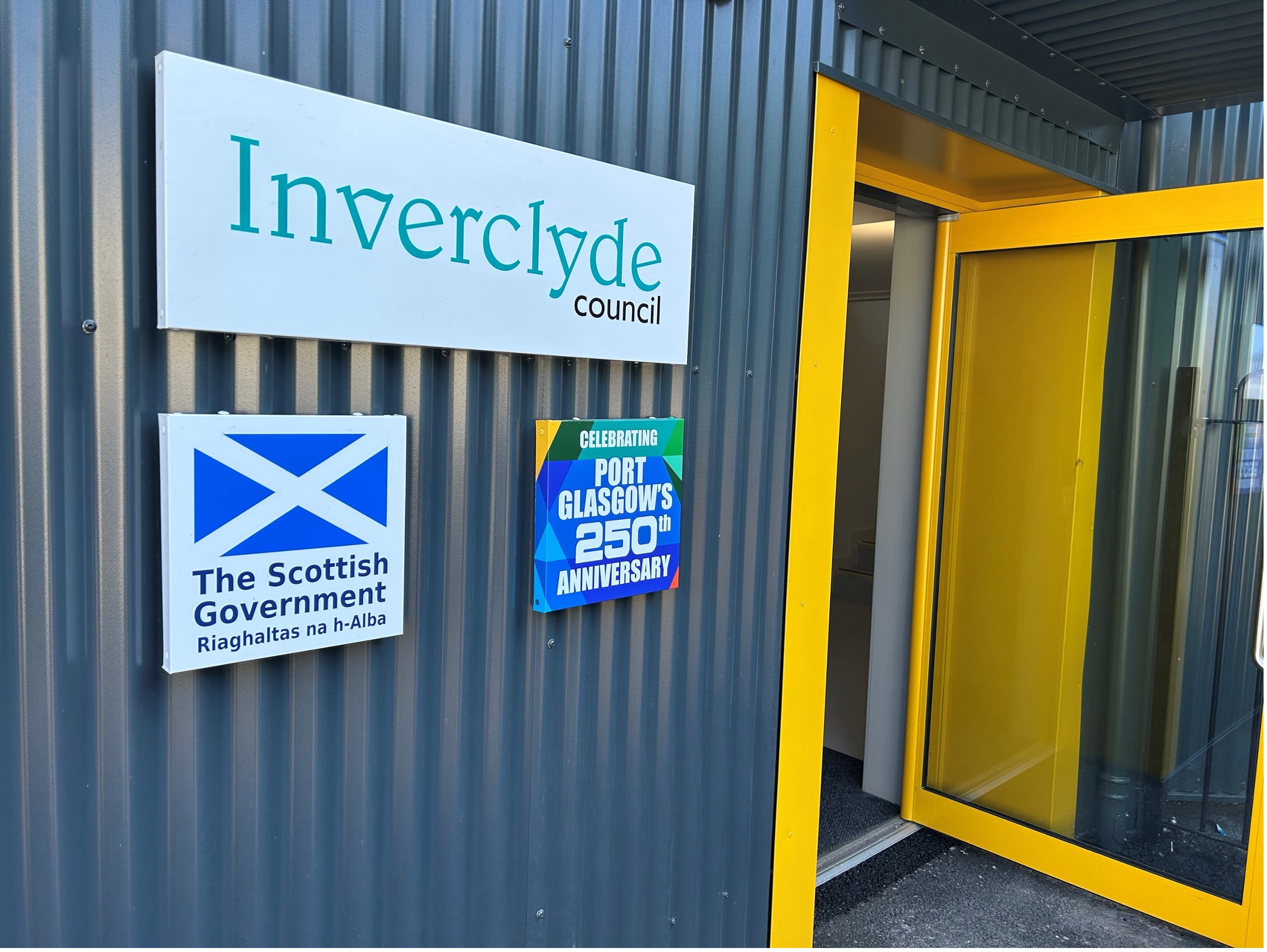
B’Hive at Boglestone Community Centre Official Opening
For further information contact:
Louise McVey
Project Officer, Poverty and Wellbeing
Inverclyde Council