Glastonbury Co-operative Fair celebrates ‘This Beautiful Idea’
- June 2026
Mobilising community assets to address the social determinants of health and shape the city we want together.
Mobilising community assets to address the social determinants of health and shape the city we want together, through Plymouth’s Community Builder Programme
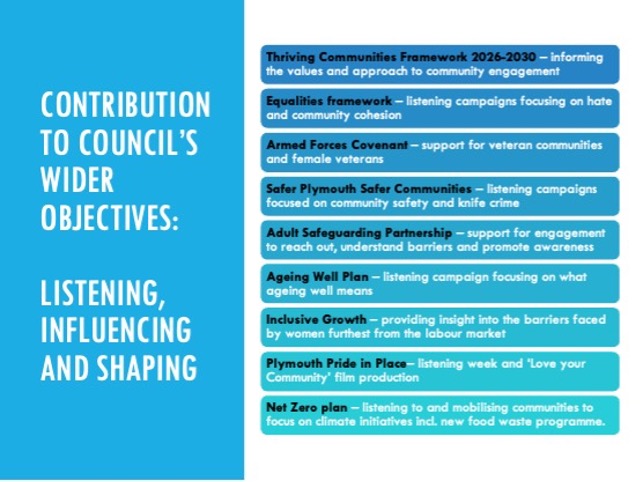
Plymouth’s Community Builder Programme (CBP) is a partnership between the Local Authority, NHS and the VCSE. Set up in 2022, as part of the City Council’s Community Empowerment Programme (CEP), which aims to ‘work collectively with communities to deliver the city we want’, the CBP is part of Plymouth City’s innovative approach to improving wellbeing and tackling health inequalities through addressing the wider social determinants of health and improving our relationships with communities in the city. It is funded by the NHS through Devon’s Integrated Care Board, a body that aims to join up health and care services and ensure that everyone has the same access to services and the same outcomes from treatment.
The CBP Theory of Change was developed with support from the University of Plymouth through stakeholder workshops and a UK-wide review of community-building models. Targeting historically under-invested populations (defined by demographic or geographic characteristics), CBs are based across 8 neighbourhoods and – unique to Plymouth – 7 communities of interest/identity. Identified through analysis of citywide surveys, these 15 communities were chosen for their higher levels of social disadvantage, lower levels of belonging and cohesion, and fewer people participating in community life. Taking an Asset-Based Community Development (ABCD) approach, which recognises the value of assets within communities and that everyone has gifts to share, the CBP aims to build resilient, thriving and connected communities to achieve the best health and wellbeing outcomes.
Zoe Sydenham
Plymouth City Council