Glastonbury Co-operative Fair celebrates ‘This Beautiful Idea’
- June 2026
Mapping the key areas of social capital and community need at neighbourhood level across the borough.

Across England’s most deprived neighbourhoods, poorer life outcomes often occur where social infrastructure and social capital are weakest. However, data on these factors is frequently only available at borough or ward level, concealing significant differences between nearby communities and complicating efforts to target support effectively. For councils, understanding community conditions at a very local level is vital. 3ni collaborated with Wigan Council to provide this insight by mapping the key areas of social capital and community need at the neighbourhood level across the borough.
Using its Discovery platform, 3ni analysed data at the Lower Layer Super Output Area (LSOA) level, small statistical regions with about 1,500 residents. This helped the council map and profile social capital levels across neighbourhoods, creating a clearer evidence base for targeted, place-based decision-making. Social capital is essential for fostering the bridging and linking social ties that underpin community cooperation and resilience.
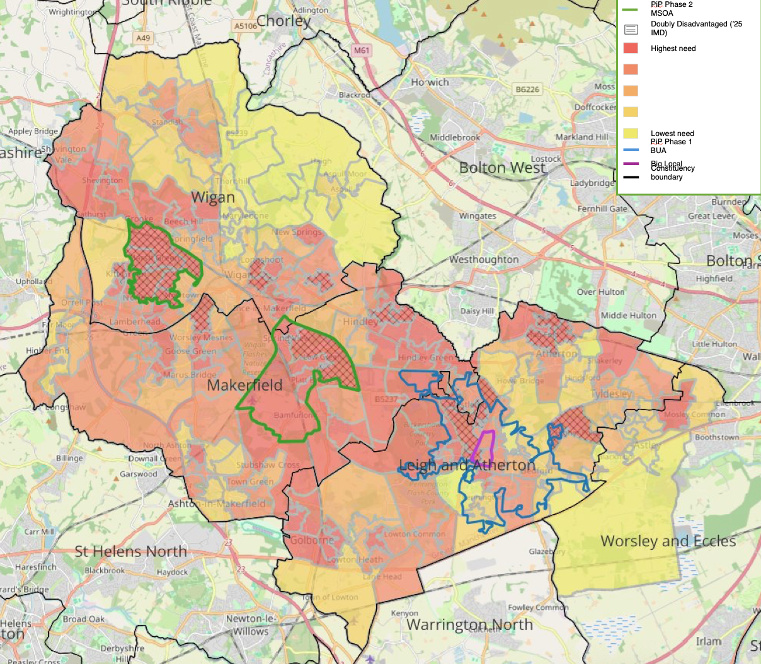
Community need heatmap of Wigan Borough, showing Pride in Place areas and doubly disadvantaged neighbourhoods
Dan Crowe
Director
3ni